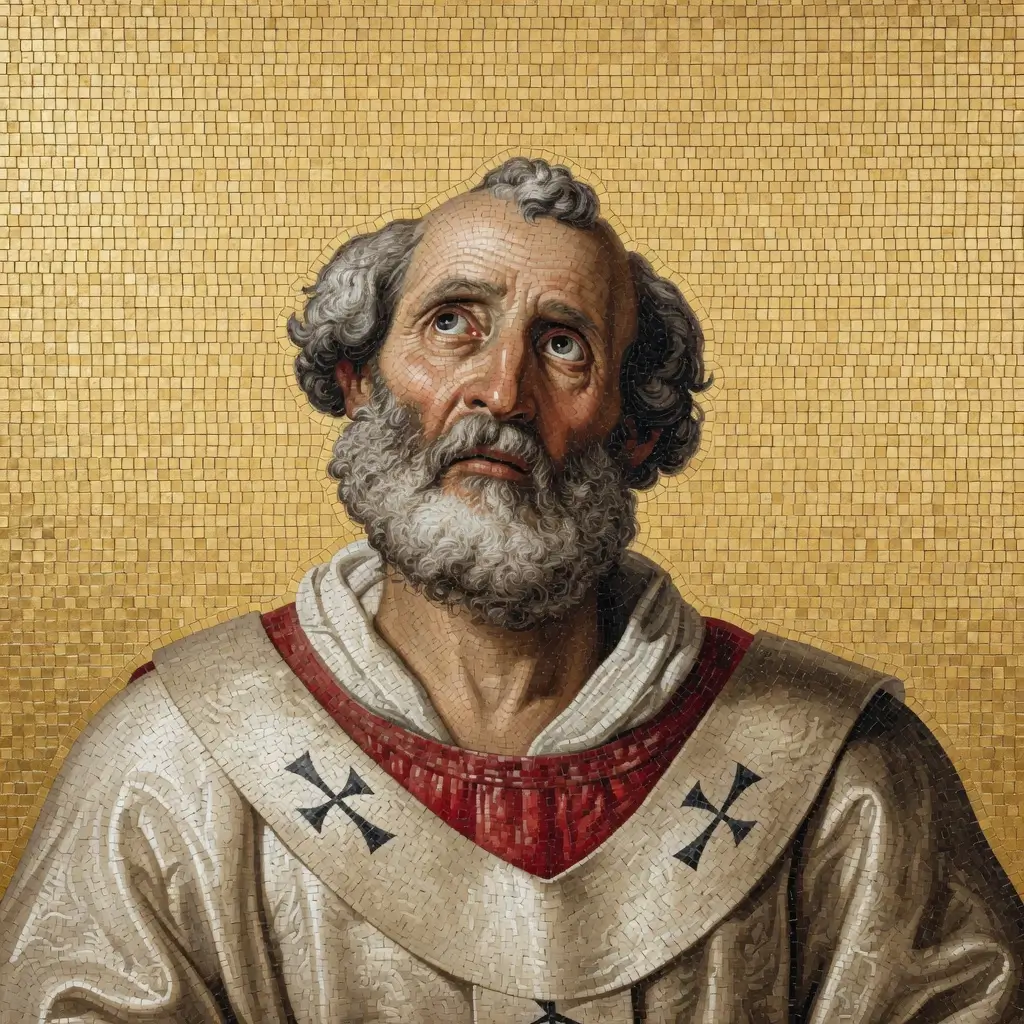
Papacy Duration: Pope Hormisdas served as Bishop of Rome from 20 July 514 to 6 August 523.
Acacian Schism: His papacy focused on resolving the Acacian schism, successfully reuniting Constantinople and Rome on 28 March 519.
Early Life and Family: Born in Frusino, Hormisdas was named after an exiled Persian noble. He was married with a son, Silverius, who also became pope later.
Pontificate: His election was controversy-free, and he worked to reconcile divisions from the Laurentian schism and the Acacian schism.
Dealing with Emperor Anastasius: Anastasius initiated peace talks, but negotiations were complex and initially unsuccessful.
Resolution of the Schism: Anastasius’ death led to Hormisdas’ demands being met under Justin I, ending the Acacian schism.
Legacy: Noted for resolving the Acacian schism, the reunion was celebrated on 28 March 519 in Constantinople’s cathedral.
After receiving your congratulatory letters, he delegated to the same, because of his outstanding merit and the most noble prerogative of his see, the vicarial prefecture of the Apostolic See in Gaul.
He praises him for seeking the peace of the Church, and once he knows the reason why he wishes to gather a council, writes that he will give a response.
The Pontiff is praised for caring about the unity of the Church, and he expresses his desire that, with heretics condemned, due honor should be paid to the Roman Church.
Given to Ennodius and Fortunatus, Bishops, Venantius, Presbyter, Vitalis, Deacon, and Hilarius, Notary, Delegates of the Apostolic See to Constantinople, by Pope Hormisdas.
It is a new practice for a Roman Pontiff to be called by the Emperor to a council, but he will attend if the decrees of the Council of Chalcedon are not called into question.
Professing the Catholic faith: The decrees of the Council of Chalcedon are to be preserved. Acacius should not be condemned for removing scandals, and peace must be considered.
He recommends condemning the religion of Nestorius and Eutyches, and writes that he will show by an edict how those who return to the faith are to be received.
He rejoices over the conversion of the provinces of Dardania and Illyricum and asks to be informed about the success of the delegation sent to Constantinople.
He praises Avitus' zeal in learning about the state of the Eastern Church, but writes that due to the treachery of the Greeks, nothing has been accomplished by the legates. He intends to send another delegation to them.
That the peace of the Church cannot be restored unless Acacius is condemned. Sent through Ennodius, Bishop of Ticinus, and Peregrinus, Bishop of Misenum, during their second delegation to Anastasius.
Hormisda writes that he has been informed of the actions taken against John of Nicopolis by the Bishop of Thessalonica and assigns this new matter to the Apostolic See for investigation through the following letter.
They write concerning what is being endured for the Catholic faith by the Eutychians, whom the emperor has not cared to restrain, and they appeal to the Roman pontiff as their common father since the emperor has not heard them.
He is pleased to hear of his arrival in Italy, approves of the letters sent to the Spanish Churches regarding ecclesiastical practices, and delegates his authority to him.
At the request of the Council of Constantinople, Justin, through Count Gratus, asks the Pope to send legates to Constantinople to reconcile peace with the Eastern Church and receive those who have lapsed.
To seek communion with the Roman Church, profess the Catholic faith, affirm the inclusion of the Pope’s name in the diptychs, and request the sending of legates to establish peace.
Commends Bishop John and rejoices that he has embraced the Council of Chalcedon and the letters of Pope Leo. Promises to admit him into the communion of the Church if he removes the name of Acacius from the sacred diptychs.
On the Return of the Bishops of Dardania and Illyricum to the Communion of the Apostolic See, the Condemnation of the Eutychian Heresy, and the Mission Sent to the East
Pope Hormisdas instructs his legates to secure the Eastern bishops’ subscription to the Formula of Hormisdas for Church unity, directing them to accept compliant bishops into communion, negotiate with the Bishop of Constantinople and Emperor Justin, and ensure public affirmation of the agreement, particularly the anathema of Acacius.
You should be cautious of those who, while accepting the decrees of the Council of Chalcedon, refuse to condemn Acacius. He commends the legates sent to ensure peace and union within the Eastern Church.
Anastasia and Palmatius, Illustrious Senatorial Women, Who Stood Firmly for the Catholic Faith During the Persecution of Anastasius. The Same as in the Previous Letter
Concerning how they were received with great honor by the Emperor: John, the Bishop, subscribed to the profession of faith, condemning Acacius and other followers, and peace was restored to the Church
John, the bishop, has embraced the Catholic faith, anathematized the heretics, and removed the name of Acacius, along with the names of other schismatics, from the sacred registers.
He praises John for returning to the unity of the Church and urges him to ensure the union of the Churches of Alexandria and Antioch, and commends the legates to him.
He praises Pompeius for showing himself to be devoted to peace and urges him to continue working toward the complete restoration of tranquility in the Church.
He advises them to speak with the emperor and his wife to bring all the Churches, especially those of Alexandria and Antioch, back to communion with the Apostolic See.
He instructs him to consider how those who condemned the Council of Chalcedon in writing, but wish to return to the Church, should be received. He also commends to him Thomas, Nicostratus, and John, bishops.
He praises his diligence in securing peace and states that he will write to the emperor to appoint him as head of the Church of Alexandria. He commends Thomas and others to him and encourages him not to leave anything undone in his haste to return.
Regarding the events that occurred in Thessalonica by the Eutychians, which he had heard through rumor; he orders that Dorotheus and Aristides be compelled to come to Rome.
He laments the death of John and orders that Dorotheus be removed from his episcopate, with another to be appointed in his place, excluding Aristides. He commands that Thomas and Nicostratus be restored to their Churches and that the Scythian monks be detained in Rome until the arrival of the legates.
They request the relics of St. Lawrence and the sanctuaries of the Apostles to be granted to Justinian, who desired to place them in the Basilica of the Apostles.
Avoiding association with heretics. Victor the deacon professes the Catholic faith. The Scythian monks condemn the Council of Chalcedon. He explains his faith, which he submits to the judgment of the Pope.
Prayers containing matters of faith questions were presented to him; Dioscorus did not approve them. He will send someone to the Pope to settle these questions.
Concerning Dorotheus of Heraclea being brought there and that the emperor did not permit him to be taken to Rome; it is unknown by whom he was released. On the matter of the date of Easter, the Eastern Church agrees with the Roman Church.
Elias cannot be restored to his church while his replacement is still alive. Thomas and Nicostratus will be restored to their seats once peace is firmly established.
Peace has been restored in Constantinople and other cities through the diligence of the legates. A gentler approach should be taken in condemning the names of bishops.
The Scythian monks, who refused to condemn their errors, were expelled from the city as heretics. The book of Faustus is not accepted by the Roman Church.
He complains that Elias, Thomas, and Nicostratus have not been restored to their sees and says that it is Epiphanius's responsibility to ensure these actions are carried out.
Acacius is condemned, and peace reigns in Constantinople. Peace with the Eastern Churches must be established in any manner possible. On the Holy Trinity.
He demonstrates the zeal of the Emperor, his wife, and himself for the unity of the Churches. He proposes that the priests of Pontus, Asia, and especially the East, who are willing to condemn the names of their bishops, be admitted into the union. He sends a chalice and other gifts to the Pope.
He sends his gratitude to the Pope and advises that he should be lenient, following the example of Anastasius, with the Eastern and especially the Asiatic bishops who refuse to condemn the names of their predecessors. He also forwards petitions offered by these same bishops for the unity of the Churches.
We confess that Christ the Lord is rightly called One in the Trinity, not One from the Trinity. In condemning the names of the bishops, it should not be done so severely.