
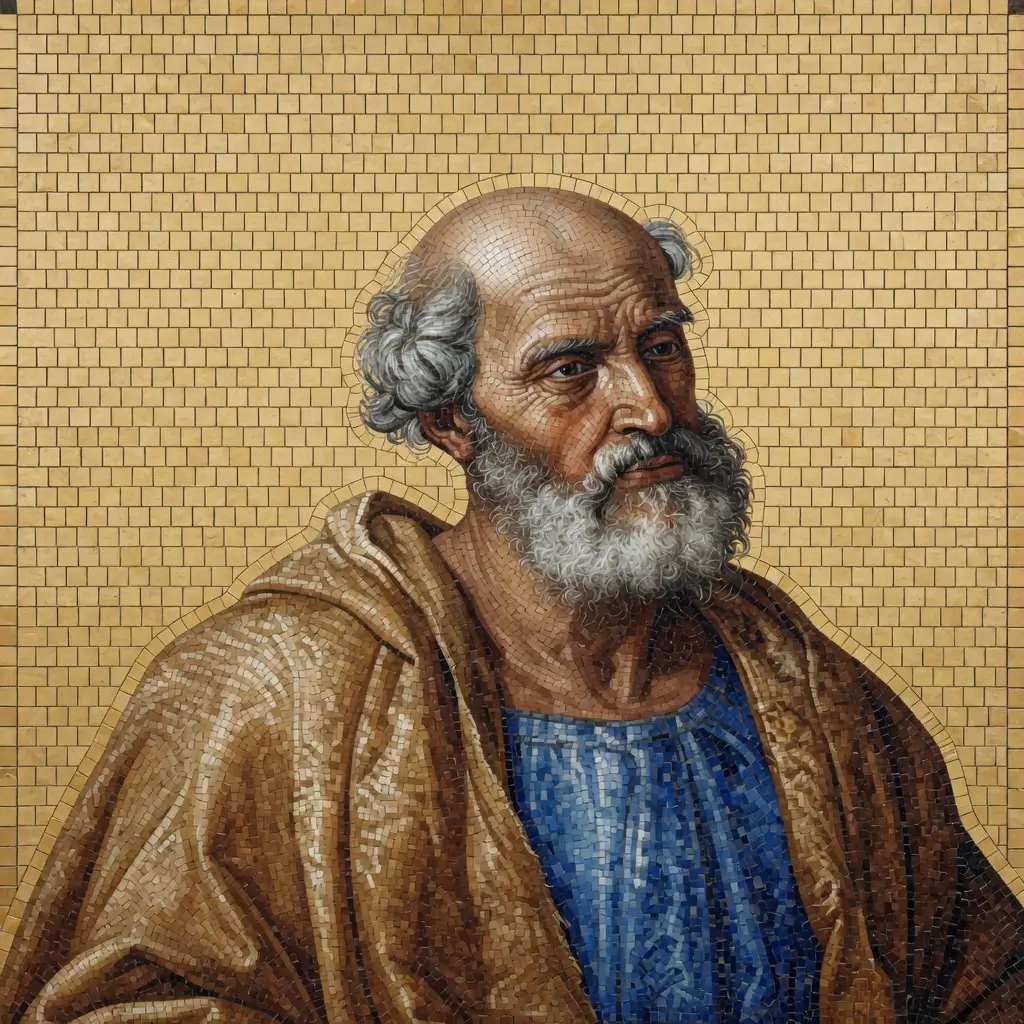
Anastasius II reigned as Bishop of Rome from 24 November 496 to his death on 19 November 498, a pontificate of just under two years entirely within the Acacian Schism that had divided Rome and Constantinople since 484. He was born in Rome, the son of a priest named Petrus from the fifth region of the city, and is buried in the portico of St. Peter’s Basilica.
His pontificate was defined by a single tactical question: on what terms could the Acacian Schism be closed. The substance of the Roman sentence against Acacius was preserved unchanged — Letter I defends it as proceeding from zelus divinitatis, zeal for divinity — but Anastasius II proposed receiving Acacian-era clerics in their grades on the strength of the Catholic doctrine of sacramental validity, that the validity of orders rests on Christ’s work rather than on the minister’s canonical standing. Thiel’s Vita identifies this sacramental concession as the principal point that drew Roman criticism, and the Roman clergy held that the firmer line was needed for the schism to be closed permanently. Hormisdas would prove them right in 519 by closing the schism on terms substantially stricter than those Anastasius II had offered.
The corpus of his surviving letters is small — six genuine letters in Thiel’s edition, with the Clovis letter (Letter II) widely accepted as a seventeenth-century forgery — but each is doctrinally substantive and consistent with the firm Roman discipline of his predecessors. Letter I to the Emperor Anastasius I affirms that the See of Peter holds, as it ever does, the primacy assigned to it by the Lord God. Letter III to Laurentius of Lychnidos professes the strict Chalcedonian formula in full. Letter VI, his last substantial doctrinal letter, refutes the traducianist heresy reported by Aeonius of Arles and articulates the Catholic doctrine of the soul’s direct creation by God. Letter V, a libellus offered to his legates by the Alexandrian apocrisiarii at Constantinople, records the legates’ canonical refusal to render judgment on the diptychs of three Alexandrian patriarchs without explicit papal mandate. The corpus shows a pontiff teaching the firm Catholic doctrine of his see in continuity with Felix III, Gelasius I, and the Council of Chalcedon.
The corpus has not previously been available in English in any complete form. Letter VI survived only in a single seventh-century codex at Darmstadt, copied by Friedrich Maassen and first published by Joseph Tosi in 1866 — a recovery so recent that Thiel’s 1868 edition is the first conciliar edition to include it. The libellus (Letter V) was originally Greek and survives in Dionysius Exiguus’s Latin translation. theseeofpeter.com presents the first complete English translation of the corpus.
His successor was Symmachus (498–514), elected on the same day as the antipope Laurentius. The Acacian Schism continued for another twenty-one years and was finally closed by Pope Hormisdas in 519 through the formula that bears his name — a formula stricter than anything Anastasius II had proposed, requiring Eastern signatories to anathematize Acacius, his successors, and all who had remained in his communion. The Hormisdan settlement is the historical answer to the conciliation Anastasius II had attempted: the East returned to communion not through the procedural softening he had offered, but through the formal subscription his successors finally required.
